

How to efficiently recycle waste lithium batteries?
SUNYGROUP’s waste lithium battery recycling line achieves industrial automation, boasts high recycling efficiency and strong processing capacity, and achieves a recycling rate of over 90%.
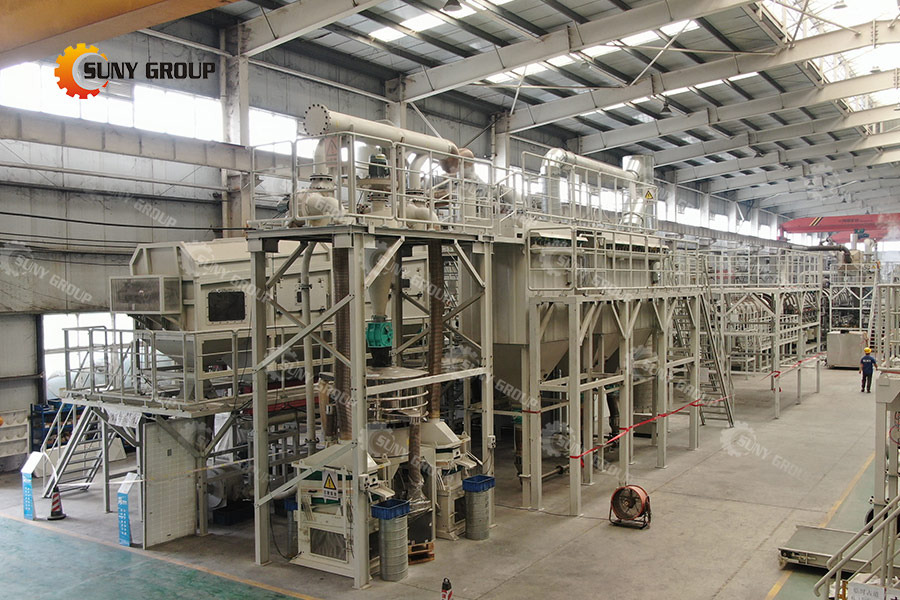
In the recycling process of waste lithium-ion batteries, avoiding secondary pollution and complying with environmental standards are important considerations for enterprises. The fully automatic and intelligent waste lithium-ion battery disposal, separation, and recycling equipment line fully incorporates environmental protection concepts in its process design and equipment configuration. From dust collection, exhaust gas treatment, wastewater recycling to solid waste classification, it comprehensively meets environmental requirements, helping enterprises achieve green recycling.
The waste lithium battery recycling equipment adopts a fully enclosed negative pressure design. All crushing, drying, pyrolysis, and sorting processes are carried out in a sealed space. The negative pressure system collects the generated dust in real time. After filtration by a bag filter, the dust concentration in the workshop is controlled within national standards, preventing dust leakage and environmental pollution. Organic waste gas generated by high-temperature pyrolysis is first condensed to recover usable components, and then treated by activated carbon adsorption + alkaline solution spraying for double purification before being discharged after meeting standards; the small amount of electrolyte vapor generated by low-temperature drying is also collected and treated by a dedicated recovery device, reducing air pollution.
At the same time, the equipment line also focuses on environmental protection and energy saving in its energy utilization. The waste heat generated by high-temperature pyrolysis is recovered through a heat exchanger and used in the low-temperature drying process, reducing external energy consumption; the equipment uses variable frequency motors, automatically adjusting energy consumption according to the production load, reducing annual power consumption by more than 20% compared to traditional equipment.
 Scrap Cars Metal Crushing Sorting Line
 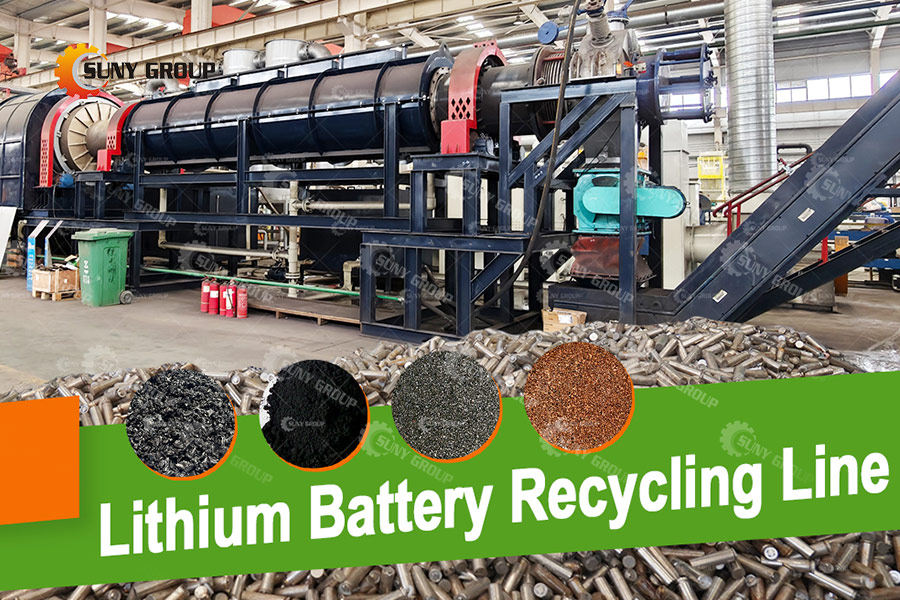 Leading Lithium-ion Battery Recycling Technology
 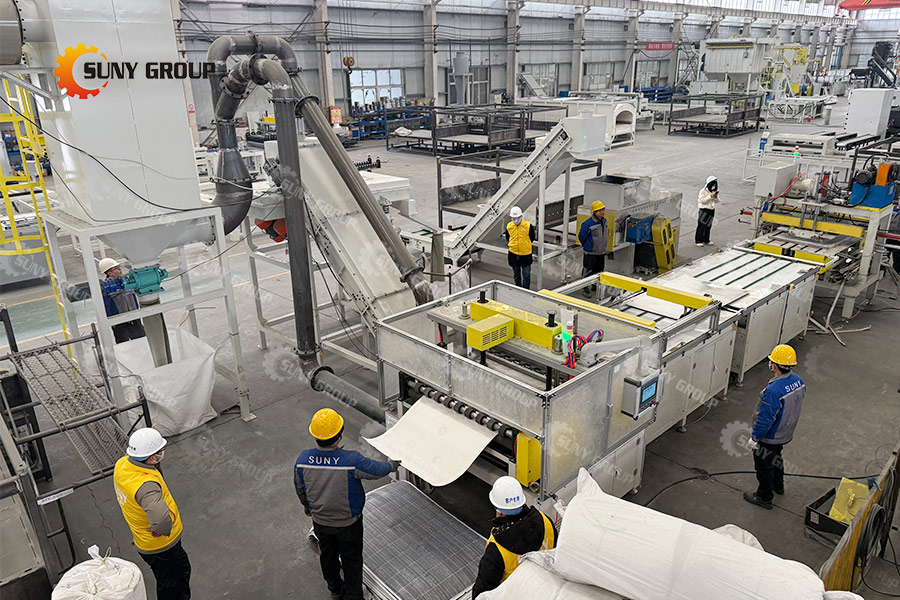 PV panels glass removing machine features
 -
Contact Us
HAVE QUESTIONS?
Leave your details and we will reply to your message in 24 hours.
GET IN TOUCH!
WhatsApp

WeChat
-

SUNY GROUP has a reputation for excellence in providing advanced recycling solutions for solid waste such as e-waste, lithium batteries, photovoltaic panels, etc.We serve the global market and are a trusted partner for industries seeking innovative and sustainable recycling technologies.
-
SOLUTIONS
PV Solar Panel Recycling Plant Lithium Battery Recycling Plant E Waste Recycling Plant Waste Cable Wire Recycling Plant Waste Motor Recycling Machine Scrap Radiator Recycling Machine Aluminum Plastic Separation Machine Wind Turbine Blade Recycling Machine Paper Plastic Recycling Plant Refrigerator Recycling Plant -
PRODUCTS
Shredder & Cutter Machine Scrap Baler Machine Crinkle Paper Shredder UBC Decoating Furnace Car Windshield Recycling Machine Eddy Current Separator Machine -
LINKS
WHATSAPP : +86 15038128697 EMAIL : sales.sunycycle@gmail.com Factory Address:
No. 1123, Shangjie District,
Zhengzhou, Henan, China (Mainland)